



- Greetings from the president
- Greetings
- Best Paper Awards
- The successful autumn academic conference in the amid of COVID-
- 2019 KSES American Traveling Fellow 연수기
- The 29th Annual International Congress of KSESr
- 의료칼럼: 3D navigation guided reverse shoulder arthroplasty
- 견슬라이더컵 골프대항전 대표선수 선발전 공지
- 학회 지난 소식들
- 회원동정
- 학회 신입회원 명단
Participation in the 2024 TSSES Travelling Fellowship program
I am deeply honored to have been chosen as the 1st Korean-Turkey traveling fellow, and I extend my heartfelt gratitude to the chairman, executives, and members of the Korean Shoulder and Elbow Society for this distinction. Alongside me, Professor Sae Hoon Kim from Seoul National University, my alma mater, was also selected. It later came to my attention that the Turkish Shoulder and Elbow Society had anticipated a younger recipient, hence they were somewhat taken aback by the selection of an older physician in his late 40s and over 50s. I especially thank my young brother, Dr. Haluk Çelik, for taking care of every detail from beginning to end throughout the entire period.
Embarking on the journey as the traveling fellow entailed a three-week itinerary spanning from April 12, 2024, to May 2, 2024. This itinerary included visits to hospitals and universities in four cities: Istanbul, Eskisehir, Ankara, and Izmir. Though comparatively briefer than the four-week schedules observed in the US, Europe, and Japan, being away from hospital duties for three weeks posed its challenges.
Upon my arrival in Istanbul on the evening of Friday, April 12, 2024, I had the pleasure of meeting with Dr. Semih Dedeoğlu, Dr. Arel Gereli, Dr. Haluk Çelik and others over kebabs and the traditional Turkish drink, Raki. Naturally, I was utterly exhausted and hardly aware as I was escorted to my hotel.
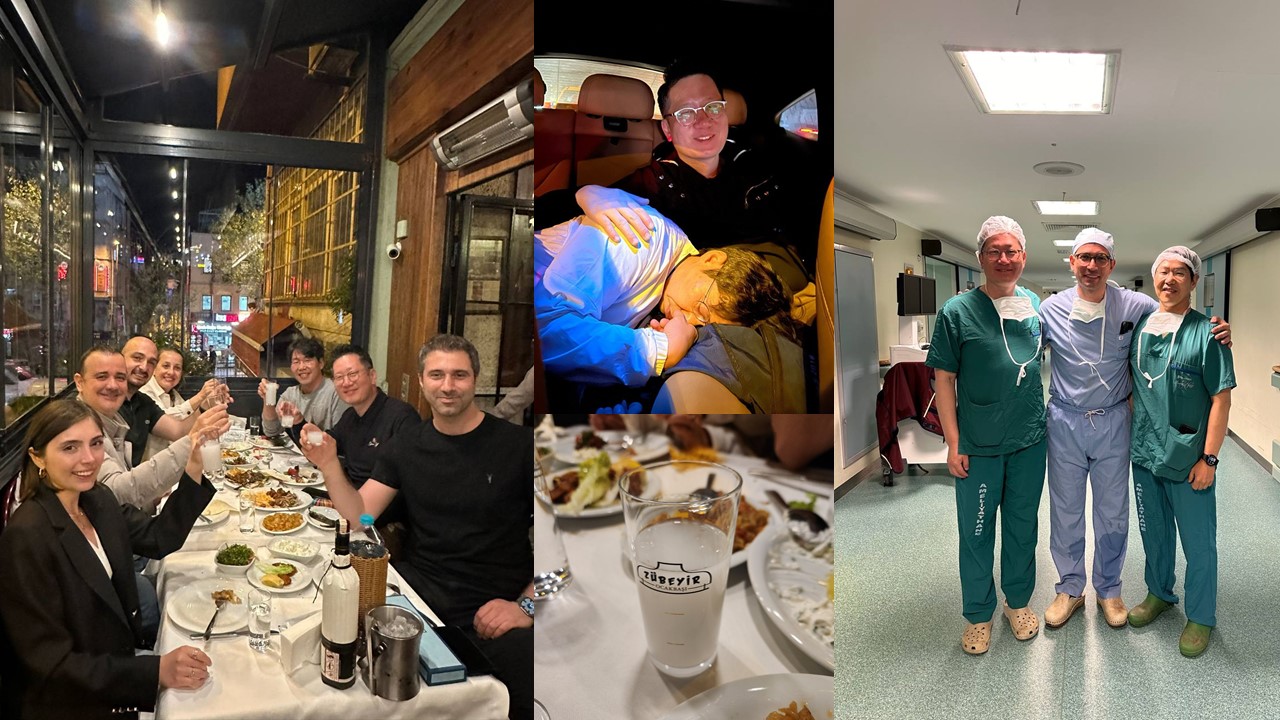
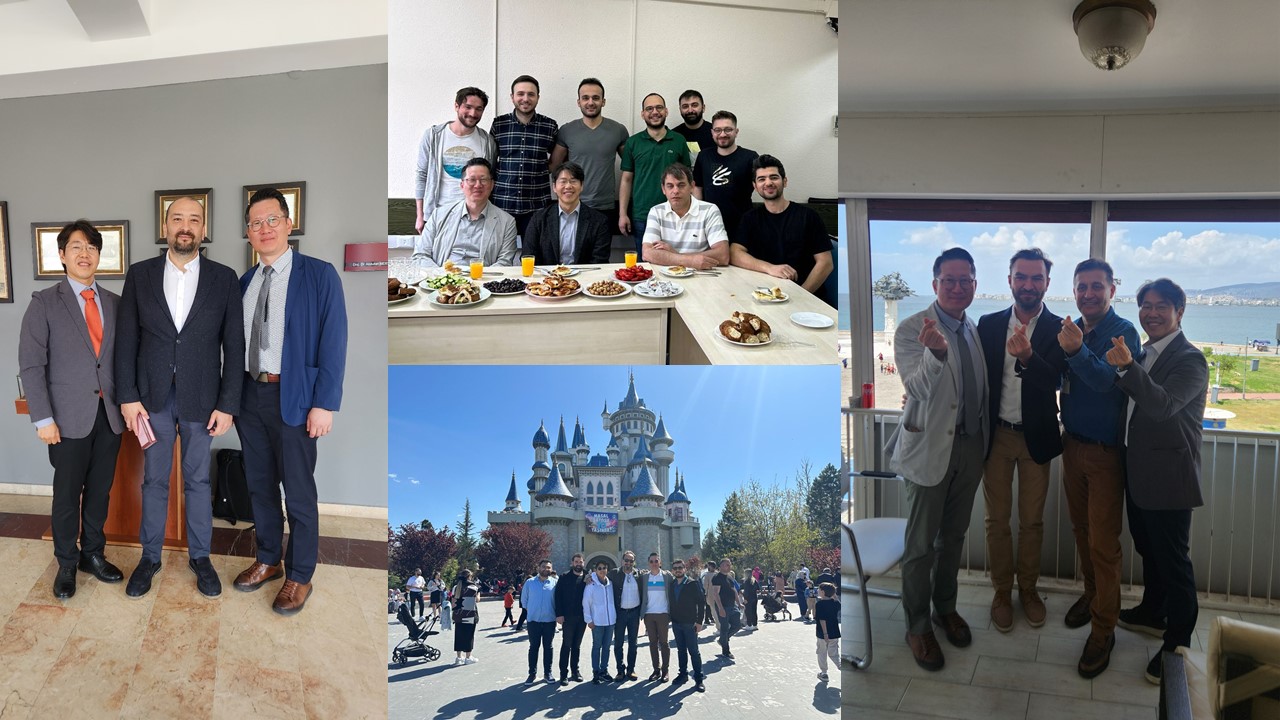
The following day, Saturday, April 13, 2024, saw me traveling by train to Eskisehir, where I had the opportunity to meet Dr. Taner Güneş, the current chairman of the Turkish Shoulder and Elbow Society, at Acibadem Hospital. There, I observed arthroscopic rotator cuff repair and the treatment for stiff elbow, followed by a delightful meal of fish kebabs and different brands of Raki. On April 15, I journeyed to Ankara, Turkey's capital, by train, and engaged in a diverse range of activities, including meeting Dr. Gazi Huri from Hacettepe University, touring Ankara Museum, and gaining firsthand experience in the university hospital's surgical room. That evening, I delivered a presentation at the Ankara Shoulder and Elbow Symposium. Subsequently, I visited Dr. Mehmet Armangil from Ankara University and Dr. Ulunay Kanatlı from Gazi University. The dedication to education and patient care displayed by both professors left a profound impression on me. Following this, I flew to Izmir, a coastal city, and met with Dr. Mustafa Ozkan from Dokuz Eylül University. The serene ambiance and private clinics along the coast in Izmir were a stark contrast to the bustling environments of Istanbul and Ankara.
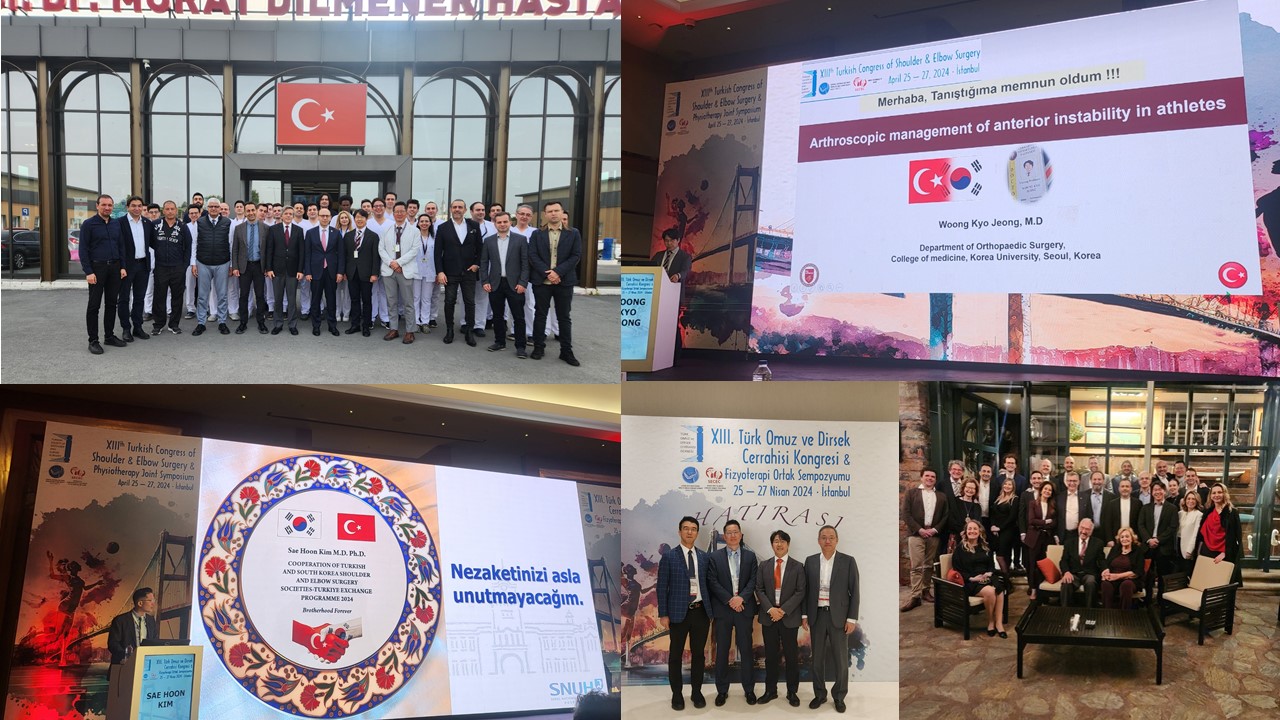
From April 25 to 27, I actively participated in the 13th Turkish shoulder and elbow surgery congress, where I presented and had the pleasure of meeting numerous Turkish doctors. Notably, the interactions with Professors Jae Cheol Yoo and Sang Jin Shin from Korea, who attended as guest lecturers, were particularly enjoyable. Additionally, I seized the opportunity to relish Korean instant noodles, convenience foods, and stir-fried kimchi, reminiscent of flavors from home.
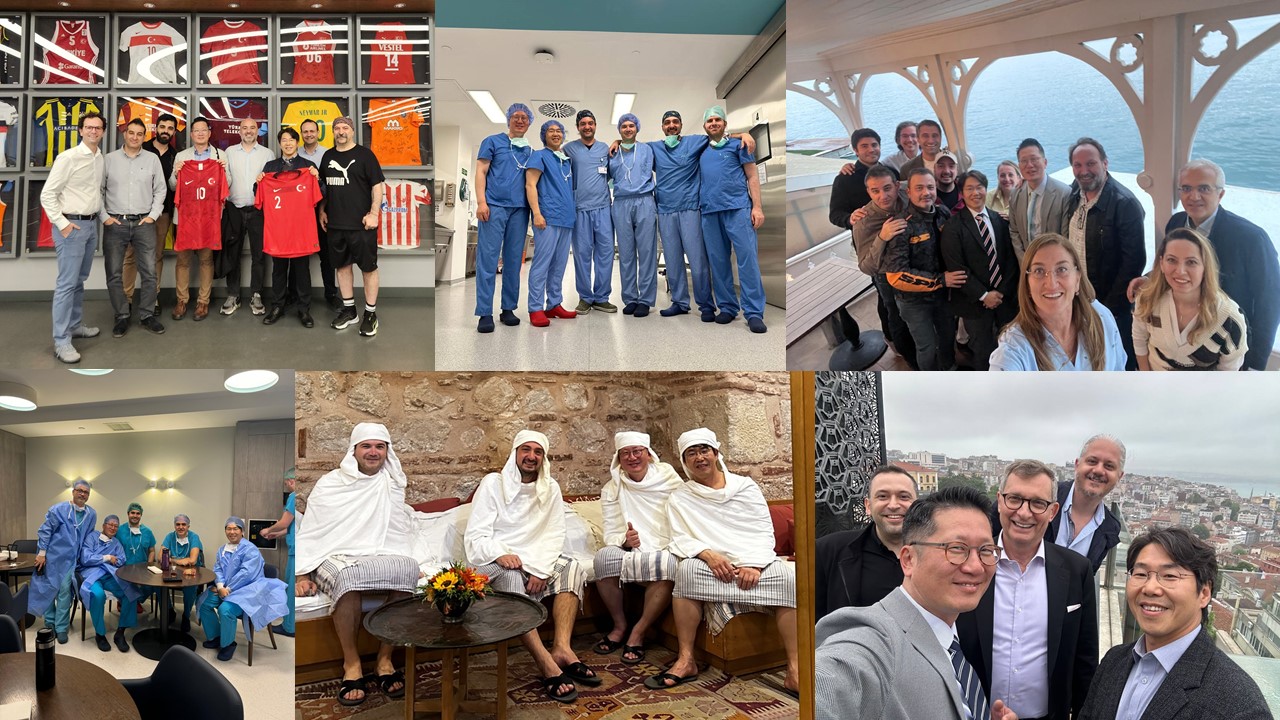
During my stay in Istanbul, I had the privilege of visiting Dr. Nuri Aydin, the director of Cerrahpaşa University, and Dr. Fatih Güven, with whom he collaborates. Dr. Nuri Aydin's remarkable achievements as a university director at such a young age left a lasting impression on me. I also had insightful visits with Dr. Ali Erşen and Dr. Kerem Bilsel from Istanbul University, and a tour of the expansive Acibadem sports center, which sparked envy with its state-of-the-art equipment for rapid post-exercise cryotherapy. Additionally, my encounter with Dr. Mehmet Demirhan from Koç University, a prominent figure in the Turkish Shoulder and Elbow Society, reminded me of President Kwang Jin Lee from Korea. Notably, I had the opportunity to witness scapulothoracic fusion procedures in patients with facioscapulohumeral muscular dystrophy. Then, I visited Dr. Semih Dedeoglu from Liv Hospital, who had previously visited Korea as a traveling fellow. Witnessing a lower trapezius transfer procedure, utilizing an inter-position graft with peroneus longus autograft, was particularly intriguing. Reflecting on my experiences in Korea, I commenced performing arthroscopic surgeries in the lateral decubitus position, realizing the enhanced visibility it offers. On this day, I indulged in the Turkish tradition of visiting a public bath, Hamam, to unwind, followed by a gracious dinner invitation from Dr. Semih Dedeoglu at his home. Concluding the journey, on the final day, I visited Dr. Ata Can Atalar from Acıbadem University Maslak Hospital, the former president of the Turkish Shoulder and Elbow Society, and participated in a farewell ceremony alongside several incumbent presidents and host doctors, marking the end of our enriching three-week expedition.
The disparities between public hospitals managed by the state and private hospitals in Turkey's healthcare system were notably pronounced. While patients in public hospitals either received treatment at minimal or no cost, there were stringent limitations on equipment and materials. For instance, procedures such as RC repair and Bankart repair were restricted to using only two anchors, with equipment mandated to be state-designated primarily Turkish products. Furthermore, lengthy waiting periods for surgeries, with some patients waiting up to a year for RC repair, underscored the challenges. Conversely, private hospitals boast excellent facilities and a wider array of equipment. However, the exorbitant medical expenses necessitated private insurance coverage for most patients. Reflecting on these observations, I reaffirmed the imperative of accurately portraying South Korea's healthcare system, amidst recent debates over medical school admissions. To secure positions in private hospitals, attaining a university professorship, which is permissible in Turkey, remained a prerequisite. Consequently, doctors diligently pursued clinical work and research to ascend to professorship. Moreover, the absence of an official shoulder and elbow fellowship program in Turkey led many doctors to seek fellowship training in the US or Europe, prompting inquiries about potential fellowship programs in Korea.
It is often said that Turkey and Korea share a fraternal bond, evidenced by historical sacrifices during the Korean War and mutual aid during calamities like last year's Turkish earthquake. Additionally, I discerned striking cultural and temperamental resemblances between the two nations.
Finally, I express my profound gratitude for the opportunity to serve as the inaugural traveling fellow and for the invaluable experiences gained. As I envision perpetual collaboration and advancement between the shoulder and elbow societies of both nations, I bring my contribution to a close.
Woong Kyo Jeong
Department of Orthopedic Surgery, Korea University College of Medicine, Seoul, Korea