

- Greetings from the president
- Greetings
- Best Paper Awards
- The successful autumn academic conference in the amid of COVID-
- 2019 KSES American Traveling Fellow 연수기
- The 29th Annual International Congress of KSESr
- 의료칼럼: 3D navigation guided reverse shoulder arthroplasty
- 견슬라이더컵 골프대항전 대표선수 선발전 공지
- 학회 지난 소식들
- 회원동정
- 학회 신입회원 명단
Participation in the 2025 KSES – JES Exchange Travelling Fellowship program
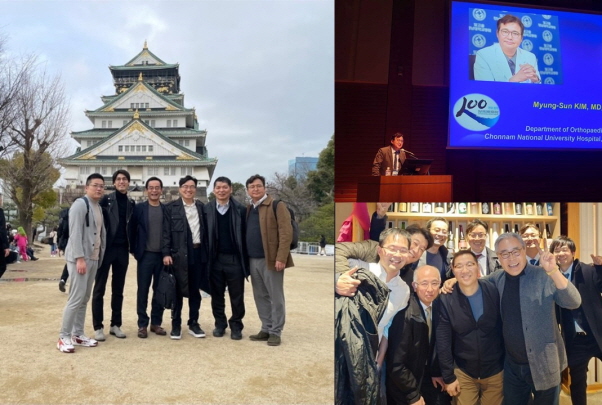
Professor Jeong Woo Kim and I had the honor of being invited by the Japan Elbow Society (JES) to participate in a two-week travelling fellowship program in Japan, from March 3 to 16, 2025. This program was organized as part of the Korean and Japanese Elbow Society Traveling Fellow Exchange Program, a joint initiative between the Korean Shoulder and Elbow Society (KSES) and JES. It was established to strengthen academic collaboration and mutual understanding between leading elbow specialists in both countries, while promoting reciprocal advancement in clinical practice and research.
Following the inaugural visit of two JES travelling fellows to Korea last year, we were honored to represent KSES in this second exchange. Over the course of two weeks, we visited prominent hospitals and research institutions specializing in disorders and trauma of the elbow. Our trip concluded in Okayama, where we participated in the 2025 JES Annual Meeting. Through this experience, we broadened our perspectives, deepened our understanding of Japanese surgical practices, and engaged in meaningful knowledge exchange with esteemed colleagues across Japan.
Our traveling fellowship program officially commenced at Keio University Hospital in Tokyo on March 3, where we had the privilege of meeting Professor Takuji Iwamoto. He shared his extensive experience with unliked total elbow arthroplasty, offering valuable insight into Japanese surgical philosophy, operative technique, and patient care approach. This visit prompted us to reflect on the similarities and differences between clinical practices in Korean and Japan.
On March 4 and 5, we visited Showa University Hospital and Toho University Hospital, where we observed arthroscopic lateral collateral ligament repair and triceps avulsion fracture surgery. We were deeply impressed by the meticulous nature of each procedure and the high level of surgical precision demonstrated by our Japanese colleagues.
The following day (March 6) took us to the National Center for Child Health and Development (NCCHD), where we discussed various cases of pediatric elbow disorders and trauma with Professor Takehiko Takagi. This visit also provided an opportunity for us to present our ongoing research, which led to an engaging academic exchange and constructive feedback.
The second half of our program took places in Osaka, from March 7 to 12, where we explored both clinical and basic science research-oriented institutions.
At Osaka Medical and Pharmaceutical University (March 7-8), Professor Teruhisa Mihata introduced his latest insights into Tommy John surgery and novel approaches to lateral collateral ligament reconstruction.
During our visit to Osaka University (March 9-10), we toured several basic research laboratories and participated in research presentations, gaining a broader appreciation for the depth and diversity of elbow-related research in Japan.
Our time at JCHO Osaka Hospital (March 11) and Osaka Metropolitan University Hospital (March 12) allowed us to engage case-based discussions and shared experiences on surgical indications and treatment strategies for various elbow conditions. The warm hospitality and collegial spirit throughout these visits left a lasting impression on us both.
The final and most memorable part of the program was the JES Annual Meeting held in Okayama from March 13 to 15. I was honored to give an invited lecture titled “Novel Patient-Specific Coronoid Reconstruction Using 3D-Metal Printing for Comminuted Coronoid Process Fractures.” Professor Jeong Woo Kim also delivered an outstanding lecture on arthroscopic techniques in elbow surgery. We had in-depth discussions with many distinguished Japanese faculty members, and were truly grateful for the warm welcome and thoughtful support extended by JES President Professor Junya Imatani.
This traveling fellowship program was far more than a series of institutional visits; it was a truly meaningful opportunity for academic exchange and relationship-building. Presenting our ongoing research directly to leading Japanese experts and receiving their candid feedback was both intellectually stimulating and practically beneficial. We were particularly inspired by the innovative and experimental approaches being taken in Japan toward various elbow disorders and trauma, especially the strong emphasis on basic science research. These observations will serve as valuable reference points as we continue to shape the future direction of elbow care and research in Korea.
Additionally, the professional networks we built throughout the program hold great promises for future academic collaboration, joint research projects, and the exchange of young surgeons between our two countries. Most importantly, this fellowship served as a valuable platform to raise the international profile of the Korean Shoulder and Elbow Society. We are confident that this program was a great success and hope it will continue as a regular and expanding initiative. Offering similar opportunities to early-career society members will be instrumental in cultivating global perspectives and fostering international collaboration among the next generation of elbow specialists, something we believe KSES should actively support.
The knowledge and experience gained through this fellowship will undoubtedly enhance both our clinical practice and research endeavors. We firmly believe that the continued collaboration between KSES and JES will play a vital role in advancing the international standing of elbow surgery and research in Korea.
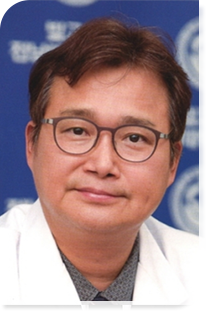 Myung Sun Kim
Chonnam National University Hospital, Gwangju, Korea.