


- Greetings from the president
- Greetings
- Best Paper Awards
- The successful autumn academic conference in the amid of COVID-
- 2019 KSES American Traveling Fellow 연수기
- The 29th Annual International Congress of KSESr
- 의료칼럼: 3D navigation guided reverse shoulder arthroplasty
- 견슬라이더컵 골프대항전 대표선수 선발전 공지
- 학회 지난 소식들
- 회원동정
- 학회 신입회원 명단
Participation in the 2026 KSES – JES Exchange Travelling Fellowship program
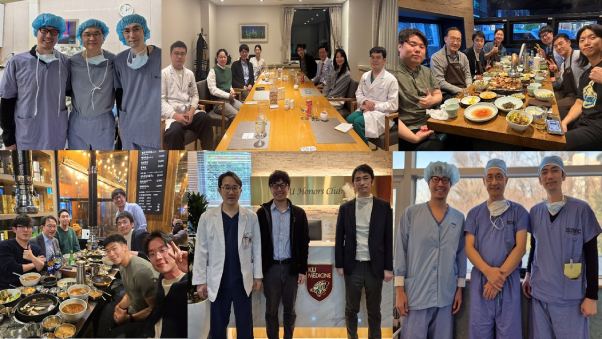
Nice to meet you. My name is Keiichiro Oura from Osaka Keisatsu Hospital, Osaka International Medical & Science Center, Osaka, Japan. I am pleased to report on my participation in the Korean Shoulder and Elbow Society (KSES)–Japan Elbow Society (JES) Travelling Fellowship program. During this fellowship, we visited Korea for two weeks, visited a total of nine clinics and hospitals, and attended the 33rd Annual International Congress of the Korean Shoulder and Elbow Society (KSES 2026). In my report, I would like to focus on the activities and experiences from the first week of the program.
Neon Orthopaedic Clinic
The first visit of this travelling fellowship was to NEON Orthopaedic Clinic. Prof. Jin Young Park allowed us to observe three arthroscopic shoulder surgeries. Although one of the cases was a technically demanding revision procedure, all operations were completed before noon. I was especially impressed by the speed of the procedures and the highly efficient use of the operating rooms, with the next case already prepared in a separate room, allowing a smooth transition between cases.
Asan Medical Center
On the following day, we visited Asan Medical Center. We had the opportunity to observe arthroscopic release for severe stiff elbow performed by Prof. In Ho Jeon. The ulnar nerve was identified through a small skin incision and protected by the assistant’s finger during arthroscopic release around the nerve. I was deeply impressed that a meaningful range of motion was restored using arthroscopic release alone in a challenging stiff elbow case. After the surgical observations, we were invited to the Sky Lounge on the upper floor of Asan Medical Center. There, we presented our research and discussed it in a relaxed atmosphere.
Korea University Guro Hospital
On Wednesday, we visited Korea University Guro Hospital. We observed two challenging operations performed by Prof. Jun Gyu Moon for severe elbow stiffness: one case after fracture fixation performed five years earlier and the other after surgery for nonunion. After the surgical observations, we presented our research and had a brief academic exchange. Prof. Moon also provided practical instruction and shared several tips on elbow surgical techniques, including arthroscopic fixation of coronoid fractures and radial head fractures.
Samsung Medical Center
At Samsung Medical Center on Thursday, Prof. Min-Jong Park allowed us to observe four surgical cases. After the operations, Prof. Park gave us a focused lecture on one of the cases involving reconstruction of the lateral collateral ligament (LCL) complex. He explained that there is no truly isometric point for the lateral ulnar collateral ligament (LUCL) and therefore recommended dual reconstruction of the radial collateral ligament (RCL) and the LUCL using the palmaris longus tendon passed through the LCL complex as a reasonable technique. In addition, we presented our research to Prof. Park and discussed it, receiving helpful advice and comments.
Cheongdam Re;ON Orthopedic Clinic
On the final day of the first week of this travelling fellowship, we visited Cheongdam Re;ON Orthopedic Clinic and were hosted by Prof. Jae-Hyung Lee. During the visit, we observed two cases of medial collateral ligament (MCL) reconstruction. In one case, arthroscopic osteophyte removal for posteromedial impingement of the elbow was also performed. Both procedures were performed in a well-organized and systematic manner, and I was impressed by the smooth surgical flow.
My report covers the first half of the KSES–JES Travelling Fellowship, while the latter half will be reported by Dr. Niitsuma. I sincerely thank the host surgeons, the international committees, and all members of KSES for their warm support. This fellowship provided valuable learning opportunities and allowed me to form many new friendships.
Finally, I would like to share a small episode from this fellowship. Before visiting Korea, I began studying Korean. Due to limited time, I learned to read Hangul, but my vocabulary remained quite limited. During my stay, I bought gochujang as a souvenir. Although I could read the word “고추장,” I did not understand what “진짜 매운” meant. It was only after returning to Japan and tasting it that I realized how extremely spicy it was. This experience reminded me that, in addition to medicine, I still have much to learn—especially about the Korean language and culture. When Korean fellows visit Japan, I hope to welcome them warmly and communicate with them in Korean, even if only at a basic level.
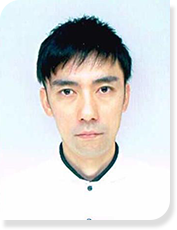 Keiichiro Oura
Osaka Keisatsu Hospital, Osaka International Medical & Science Center, Osaka, Japan.