



- Greetings from the president
- Greetings
- Best Paper Awards
- The successful autumn academic conference in the amid of COVID-
- 2019 KSES American Traveling Fellow 연수기
- The 29th Annual International Congress of KSESr
- 의료칼럼: 3D navigation guided reverse shoulder arthroplasty
- 견슬라이더컵 골프대항전 대표선수 선발전 공지
- 학회 지난 소식들
- 회원동정
- 학회 신입회원 명단
Participation in the 2026 Peri-Congress Surgical Observation Tour (PCSOT)
Overview of the Korean Shoulder and Elbow Society (KSES)
Founded in 1993 by a group of 15 pioneering orthopedic scholars, the Korean Shoulder and Elbow Society (KSES) has evolved from a regional academic organization into one of the world’s three most authoritative societies specialized in shoulder and elbow surgery, standing side by side with the American Shoulder and Elbow Surgeons (ASES) and the Japanese Shoulder Society (JSS). Over the past three decades, KSES has maintained rapid and high-quality development, now boasting more than 1,700 registered professional members, and has long been recognized as the top-tier subspecialty academic institution under the Korean Orthopaedic Association, leading the progress of upper extremity orthopedics in Asia.
KSES has made extraordinary milestone achievements in global academic layout and discipline construction. In 2016, it successfully hosted the 13th International Congress of Shoulder and Elbow Surgery (ICSES), the highest-level global conference in the field, which officially established South Korea’s core status as an Asian hub for international shoulder and elbow surgery academic exchanges. In terms of academic journal development, its official journal Clinics in Shoulder and Elbow was originally launched in 1998. After standardized iteration and full English transformation in 2014, it has been included in authoritative international databases including SCOPUS and ESCI, becoming an essential academic platform for global scholars to publish innovative clinical research, surgical technique innovations and long-term follow-up research results in shoulder and elbow surgery.
Adhering to the core mission of promoting standardized clinical practice, innovative technological research and international academic collaboration, KSES has cultivated a large number of world-class upper extremity orthopedic experts. Its members have continuously contributed cutting-edge surgical technologies, clinical evaluation systems and high-quality research outcomes to the global orthopedic community, profoundly influencing the standardized development of shoulder and elbow surgery worldwide. Beyond annual academic conferences, KSES has launched the exclusive Peri-Congress Surgical Observation Tour (PCSOT), a high-end customized clinical observation program. Strictly selected by the KSES International Cooperation Committee through internal voting, this invitation-only project only admits one outstanding international scholar annually, providing a rare platform for global young orthopedic surgeons to observe top Korean clinical practices and conduct in-depth academic exchanges.
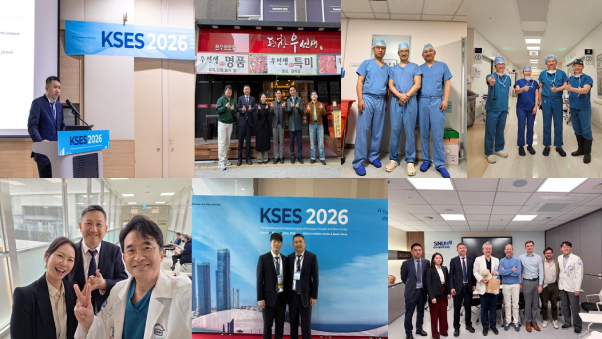
My exclusive 5-day PCSOT academic observation took place from March 30 to April 3, 2026, covering three core medical cities in South Korea: Busan, Seoul and Wonju. This in-depth clinical study tour was launched immediately after the conclusion of the 2026 KSES Annual Congress, enabling me to continue my academic exploration on the basis of the annual summit and gain systematic and valuable clinical and academic insights.
Busan: Busan Medical Center, Dr. Young-Min Noh
Shortly after wrapping up the 2026 KSES annual conference and bidding farewell to fellow global orthopedic colleagues, I kicked off my exclusive PCSOT journey in Busan. My first host was Dr. Young-Min Noh from Busan Medical Center, one of the core organizers of the 2026 KSES annual congress. On this day, I observed three complete and sophisticated shoulder and elbow surgical cases performed by Dr. Noh’s team.Dr. Noh demonstrated rigorous clinical thinking, standardized surgical procedures and patient-centered clinical concepts. He is extremely kind and passionate in academic communication, patiently explaining key surgical difficulties, intraoperative contingency strategies and postoperative rehabilitation management ideas. His professionalism and humility laid a warm and solid foundation for my subsequent multi-site academic observation.
Seoul St. Mary’s Hospital, Prof. Yang Soo Kim
On the second day of the tour, I visited Seoul St. Mary’s Hospital, the Catholic University of Korea — a top-tier comprehensive tertiary hospital in South Korea and one of the country’s largest single-building medical centers. Ranked 93rd in the global hospital ranking in 2023, the hospital possesses world-class medical equipment, standardized clinical management systems and strong academic research capabilities, representing the highest level of comprehensive medical services in South Korea.
I had in-depth academic exchanges with Prof. Yang Soo Kim, a close friend of my supervisor. Prof. Kim serves as the Chief of the Shoulder and Elbow Surgery Department at Seoul St. Mary’s Hospital, holding the important positions of Past President of KSES and President-Elect of the Korean Orthopaedic Association (KOA). He is a leading expert in the field of Asian shoulder and elbow surgery, with profound academic attainments and rich clinical experience.
In face-to-face communication, Prof. Kim’s unique personal charm left a deep impression on me. He is witty and humorous, possesses innovative clinical thinking, and maintains rigorous and dedicated professionalism in clinical work. He shared a large number of classic difficult cases, innovative surgical improvement experiences and frontier academic viewpoints, which broadened my clinical vision greatly.
Eunpyeong St. Mary’s Hospital, Prof. Hyun-Seok Song
The third day’s observation was arranged at Eunpyeong St. Mary’s Hospital of the Catholic University of Korea, where the incumbent KSES President Prof. Hyun-Seok Song works. During the exchange, I learned the rarity and gold-standard selectivity of the PCSOT program: only one international scholar is approved to participate in the full-cycle PCSOT observation every year, selected through strict voting by the KSES International Cooperation Committee. I felt extremely honored to obtain this exclusive qualification, which is inseparable from the academic influence of China’s national orthopedic center and the rigorous academic guidance of my supervisor.
The hospital is equipped with internationally leading precision orthopedic diagnosis and treatment equipment. The advanced Patient-Specific Instrument (PSI) system and AI surgical recording and analysis system brought me a brand-new perception of intelligent orthopedic surgery, realizing precise, individualized and standardized surgical auxiliary diagnosis and treatment. Meanwhile, Prof. Song’s ultra-delicate surgical operation, precise anatomical dissection and standardized intraoperative control of details fully demonstrated the top clinical level of Korean shoulder and elbow surgery, providing an important reference for my daily surgical practice.
Yonsei University Wonju Severance Hospital, Prof. Doo-Sup Kim
On the fourth day, I traveled about 90 minutes from downtown Seoul to Yonsei University Wonju Severance Hospital, a key affiliated hospital of Yonsei University with outstanding strength in orthopedic subspecialties. The host of the day was Prof. Doo-Sup Kim, Vice President of the hospital and President-Elect of KSES, a well-known expert committed to the innovation and popularization of minimally invasive shoulder surgery.
Prof. Kim specially arranged live surgical demonstrations for us, focusing on two core clinical technologies: the standardized clinical application of novel surgical patches for rotator cuff repair, and the anatomical minimally invasive repair technique for simple Bankart lesions. He explained the technical advantages, applicable population, intraoperative key points and postoperative efficacy evaluation of the new patch in detail, helping me systematically understand the latest progress of rotator cuff repair materials and minimally invasive repair concepts in the international field.
Prof. Kim is easy-going and talkative. He has visited China many times, has a deep understanding of Chinese medical development and traditional culture, and is particularly interested in Chinese wine culture. The relaxed and in-depth cross-border communication not only narrowed the academic distance, but also promoted the friendly bilateral academic exchanges between China and South Korea.
Bundang: Seoul National University Bundang Hospital, Prof. Joo Han Oh
The final day of the PCSOT tour started with an early 7:00 a.m. exclusive mini-symposium at Seoul National University Bundang Hospital, hosted by Prof. Joo Han Oh, a top global authority in shoulder and elbow surgery. Prof. Oh holds numerous prestigious academic titles: Past President of KSES, Incumbent President of KOA, and double winner of the world-renowned Charles Neer Award, the highest honor in the field of shoulder surgery.
He has achieved fruitful academic results, having published nearly 300 high-quality peer-reviewed papers in top international journals. More commendably, he has independently built and maintained a complete clinical follow-up database, recording detailed diagnosis, treatment and long-term follow-up data of more than 7,000 patients, providing solid data support for clinical research and surgical technique optimization in the industry.
During the academic discussion, Prof. Oh highly praised my supervisor as “more than clever”, a sincere evaluation that I fully agree with. In addition, I met three French traveling shoulder surgery fellows during the event. They complained that the 2-day observation schedule was extremely intensive, and I comforted and encouraged them to cherish this precious international study opportunity and enjoy the rigorous and fruitful academic journey in South Korea.
Post-Tour Reflection & Academic Harvest
TThis exclusive 5-day KSES PCSOT in-depth clinical observation experience is an extremely precious international academic opportunity. As the only selected international scholar of this year’s program, I have systematically observed the standardized clinical diagnosis and treatment processes, innovative surgical technologies and intelligent medical application achievements of South Korea’s top shoulder and elbow surgery centers.
Through face-to-face in-depth exchanges with a group of top authoritative experts including incumbent, past and future KSES presidents, I have gained a deeper understanding of the current international development trends of shoulder and elbow surgery, learned advanced concepts of precise, individualized and minimally invasive surgery, and recognized the importance of clinical data accumulation and standardized long-term follow-up for discipline innovation.
Meanwhile, this study tour further consolidated the friendly academic cooperative relationship between China’s national orthopedic center and KSES, laid a foundation for future bilateral academic exchanges, case sharing and scientific research cooperation, and will continue to guide and inspire my subsequent clinical work, surgical technology improvement and academic research innovation.
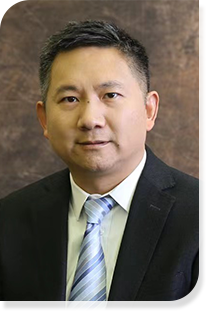 Song Zhao
Shanghai Sixth People's Hospital, Shanghai, China